Orbital
Sunset
Ryan Dick
The ties between the world we know and the Universe beyond.
Find the connections in the beauty of nature and the alien environments of space.
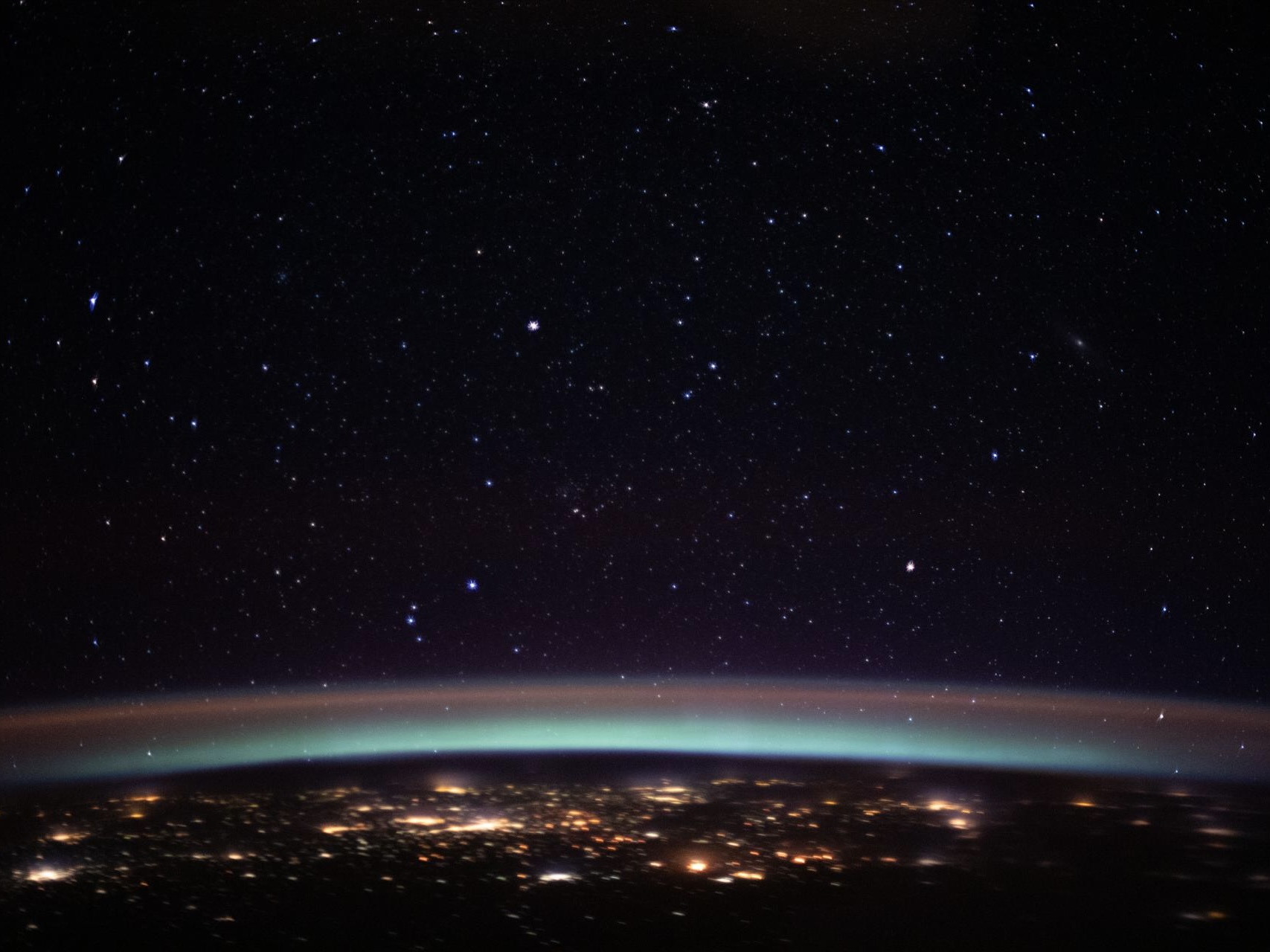
The world we know is vast and varied. Lush forests, arid deserts, deep oceans, and frozen mountain peaks all thrive with life and energy, creating a planet so diverse that it can feel as though these biomes belong to entirely different worlds. In contrast, our mental picture of outer space is a cold, airless void—scattered with distant stars and the occasional barren planet of ice or rock.
Yet these two seemingly opposing realms share more than we often realize. The same laws of physics that shape Earth also govern the wider universe. They explain why familiar places feel alien when compared to distant worlds, why sunsets fade away in red and gold on Earth but glow blue on Mars, and why the forces that warm our planet produce scorching heat on Venus and bitter cold on Mars. Those very laws even allow methane to flow across Titan like water carves through the Grand Canyon.
We are all made of stardust—particles gathered, scattered, and reshaped over an incomprehensible time into everything we see, both near and far. Orbital Sunset explores the hidden connections between the familiar wonders of our natural world and the strange, distant realms of space, revealing how the same laws of physics link them all.